
Why Is It So Hard to Relax? Understanding Restless Minds, Anxiety, Trauma, and ADHD
"Just relax."
It's one of the most common pieces of advice people receive… and, one of the least helpful if your mind rarely slows down.
If you've ever climbed into bed exhausted only to have your thoughts speed up, found yourself unable to sit still during a vacation, or noticed that your body feels tense even when nothing is wrong, you're not alone.
Many adults assume they're simply "bad at relaxing." In reality, there may be a very good reason your brain has difficulty switching gears.
What Does a Restless Mind Feel Like?
A restless mind isn't just having a lot to do.
It often feels like:
Constant mental chatter
Overthinking conversations
Difficulty shutting off work at the end of the day
Feeling productive but never truly rested
Trouble falling asleep because your brain is still active
Feeling guilty when you're not accomplishing something
Frequently scanning for what might go wrong
Becoming overwhelmed by small decisions
Feeling physically tense without realizing it
While these experiences are common, they can also be signs that your nervous system spends much of its time in a heightened state of alertness.
Why Does Relaxation Feel So Difficult?
Your brain is designed to keep you safe, not necessarily comfortable. When your nervous system believes it needs to stay vigilant, relaxation can actually feel unfamiliar. Several different experiences can contribute to this.
Anxiety
People with anxiety often become skilled at anticipating future problems. Even during calm moments, the brain may continue searching for possible threats or unfinished tasks.
Trauma
Trauma can leave the nervous system expecting danger long after the event has passed. This isn't a character flaw or lack of willpower—it's a protective response that once served an important purpose.
For some people, slowing down may actually increase awareness of uncomfortable emotions or physical sensations they've learned to avoid.
ADHD
Many adults with ADHD describe having a brain that is "always on."
Rather than difficulty paying attention, ADHD is often a challenge with regulating attention. Thoughts may move rapidly from one topic to another, making quiet moments surprisingly difficult.
Many adults—especially those diagnosed later in life—spent years believing they were simply disorganized, anxious, or overwhelmed before recognizing that ADHD played a role.
A Simple Place to Start:
The 4-7-8 Breathing Technique
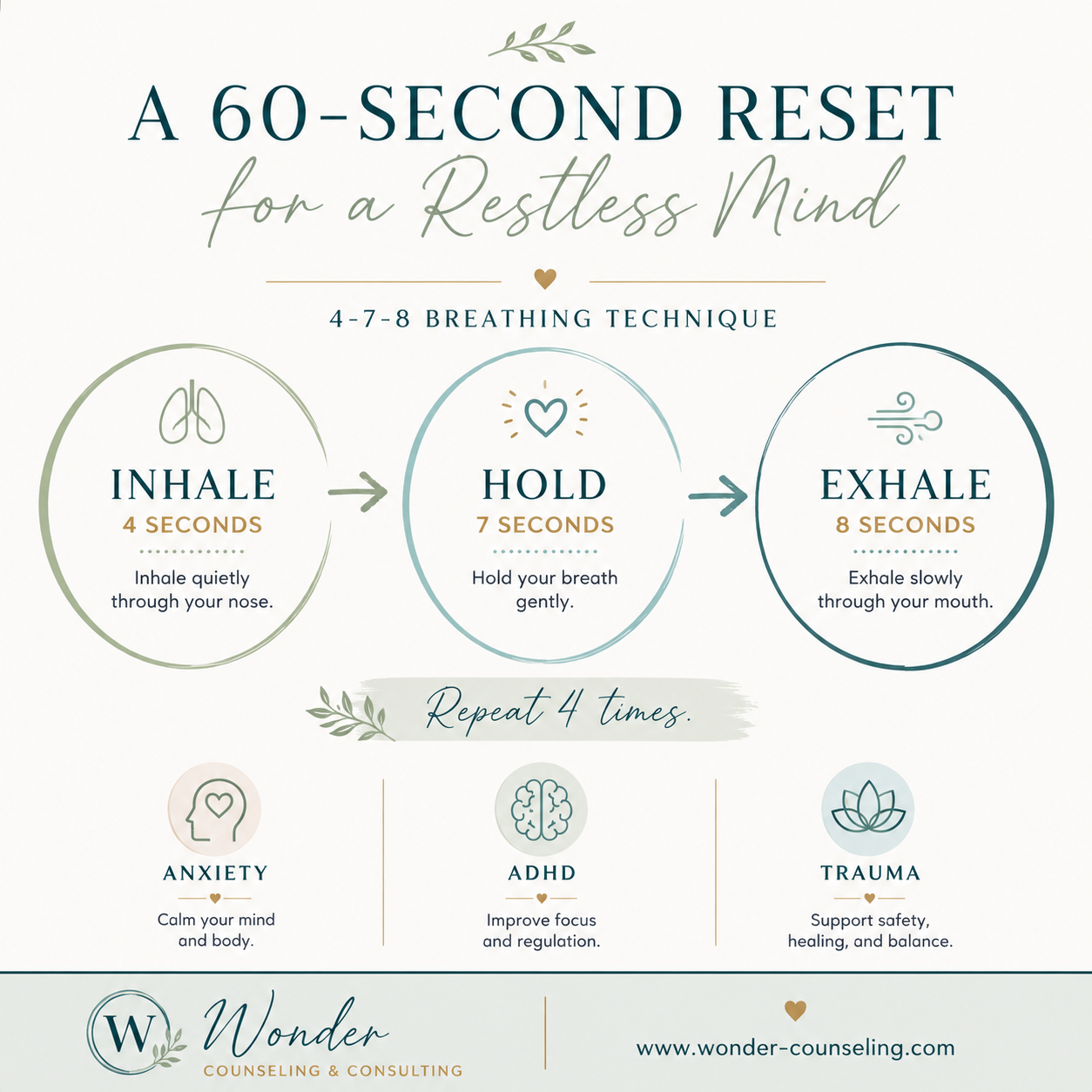
One relaxation exercise with growing popularity is the 4-7-8 breathing technique, introduced by Dr. Andrew Weil.
Here's how to practice it:
Sit comfortably.
Place the tip of your tongue gently behind your upper front teeth.
Inhale quietly through your nose for 4 seconds.
Hold your breath for 7 seconds.*
Exhale slowly through your mouth for 8 seconds, making a gentle "whoosh" sound if comfortable.
Repeat up to four cycles.
The goal isn't perfect timing. You're giving your nervous system repeated signals that it's safe to slow down.
*If holding your breath increases discomfort, dizziness, or anxiety, skip the breath hold and simply practice making your exhale longer than your inhale.
Ways to Support a Restless Nervous System*
Get Your Body Moving
Walking, stretching, yoga, or gentle exercise help complete the body's stress response and reduce physical tension.
Reduce Decision Fatigue
If your brain feels overloaded, simplify daily routines.
Preparing meals ahead of time, creating consistent morning habits, or limiting unnecessary choices can reduce cognitive strain.
Externalize Your Thinking
Instead of trying to remember everything, write it down.
Calendars, planners, reminder apps, sticky notes, and visual checklists reduce the mental effort of holding information in working memory.
This strategy is especially helpful for adults with ADHD.
Practice Progressive Muscle Relaxation
Slowly tensing and releasing different muscle groups helps many people become aware of tension they didn't realize they were carrying.
Spend Time Outdoors
Even brief exposure to nature has been associated with reduced stress and improved mood.
Build Small Moments of Recovery
Relaxation doesn't have to mean sitting still for an hour.
Sometimes five intentional minutes between meetings, a short walk after work, or a quiet cup of coffee without your phone is enough to help your nervous system reset.
*Many people benefit from combining several approaches.
You Don't Have to Force Yourself to Relax
Many people believe they're failing because relaxation doesn't come naturally.
More often, they're working with a nervous system that has learned to stay alert.
The good news is that nervous systems can learn new patterns.
With patience, practice, and the right support, it's possible to feel calmer, more grounded, and better able to enjoy the moments that matter.
When Relaxation Isn't Enough
Breathing exercises and self-care strategies can be valuable tools, but they aren't a replacement for therapy when anxiety, trauma, or ADHD are significantly affecting daily life.
If you find yourself constantly overwhelmed, emotionally exhausted, unable to slow your thoughts, or stuck in patterns that don't improve despite your best efforts, working with a therapist can help you understand why your nervous system responds the way it does and develop practical strategies tailored to your experiences.